
Supply Chain Decisions for Industrial Resilience
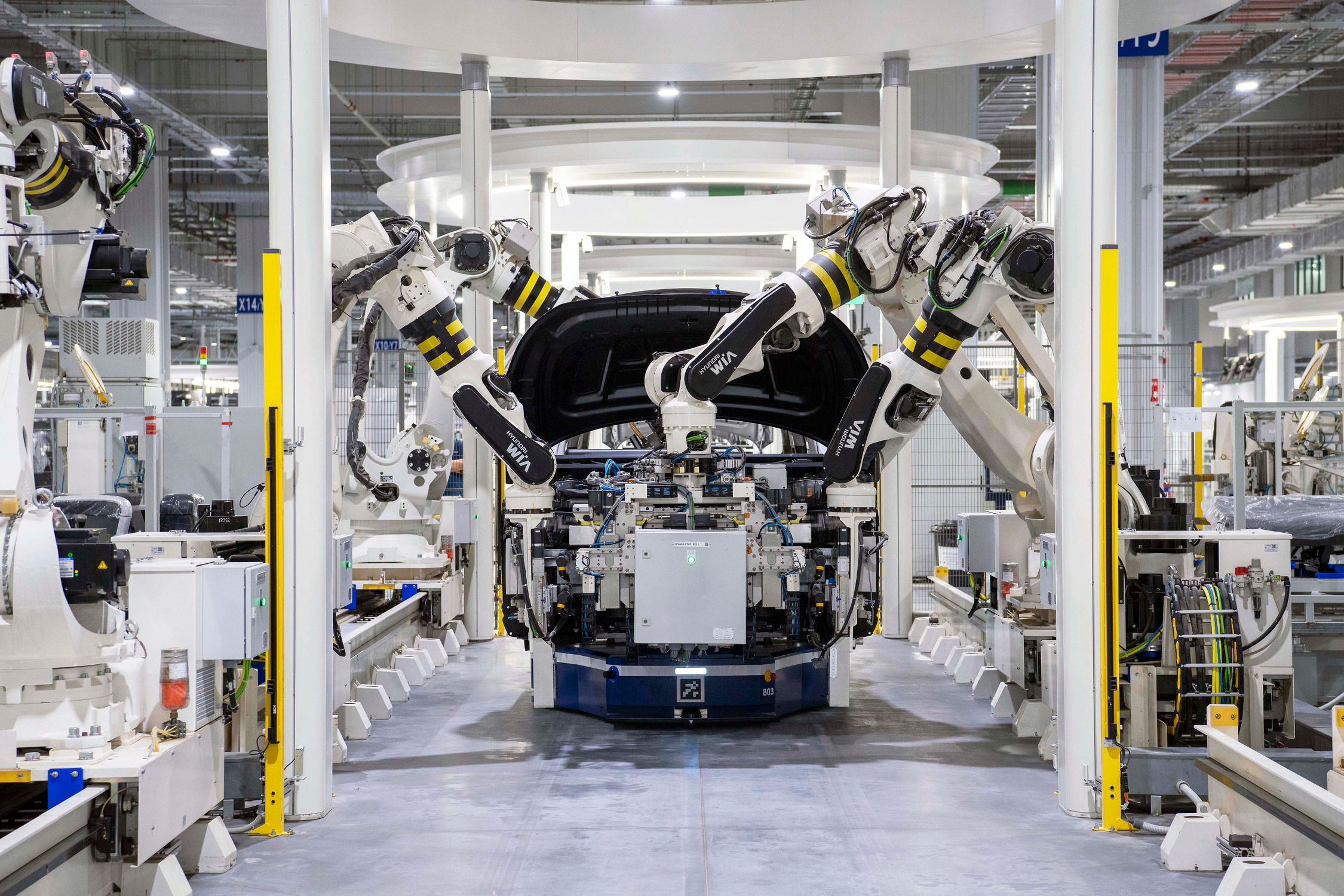
America and its allies are rediscovering a hard truth: the future is not built in software alone. AI, defense systems, chips, energy infrastructure, rockets, data centers, advanced manufacturing, and modern logistics all depend on the same physical foundation: materials, machines, labor, suppliers, transportation capacity, and production decisions that have to happen under pressure.
For the last twenty years, technology narratives were dominated by bits. The next twenty will be defined by whether we can coordinate bits and atoms fast enough to build, replenish, reroute, and scale the physical world. That makes supply chain decision speed a strategic capability.
The Bottleneck Has Moved
Industrial resilience is often discussed as a capacity problem: build more factories, add more suppliers, reshore production, increase inventory, expand the defense industrial base. All of that matters, but capacity alone is not enough. A factory with the wrong materials cannot produce. Inventory in the wrong place does not protect customers. A supplier delay does not become a recovery plan by itself. A tariff shock, port disruption, semiconductor shortage, or energy constraint does not wait for a weekly planning meeting.
The bottleneck is increasingly the decision itself:
- What should we build now?
- Which inventory should be reallocated?
- Which order should be protected?
- Which material shortage will constrain production first?
- Which production line should be rescheduled?
- Which customer commitment is most exposed?
- Which action protects throughput, revenue, and margin at the same time?
These are not abstract planning questions. They are the operating decisions that determine whether industrial capacity turns into output.
Why This Matters Now
The world has entered a period of sustained industrial volatility. Tariffs are repricing components. China decoupling is forcing companies to redesign sourcing and logistics networks that took decades to build. Ukraine has exposed the strain on defense production and replenishment. Middle East instability threatens critical shipping lanes and energy flows. Semiconductor, transformer, labor, and materials constraints are no longer edge cases.
At the same time, the demand side is accelerating. AI infrastructure, defense modernization, electrification, aerospace, robotics, and advanced manufacturing all require more physical throughput. The result is a simple but severe mismatch: the physical economy needs to move faster, while the decisions that control production are still trapped across ERP systems, spreadsheets, planning tools, emails, tribal knowledge, and disconnected workflows.
Legacy systems were built to record, plan, and report. Industrial resilience requires something different: the ability to decide and act when reality diverges from the plan.
Mobilization Is a Decision-Speed Problem
Shyam Sankar and Madeline Hart’s Mobilize makes this point sharply in the context of America’s industrial base. The argument is not just that the United States needs more manufacturing. It is that production, innovation, and national resilience are inseparable.
Stockpiles matter. Factories matter. But in a volatile world, the ability to regenerate production matters more, and that requires decision infrastructure. Modern industrial systems are systems of systems: ERP, SCM, WMS, TMS, MES, supplier portals, spreadsheets, and human planners all hold pieces of the truth. But when disruption hits, operators need a coordinated answer, not another fragmented view.
The next industrial race will be won by the organizations that turn volatility into production decisions fastest.
What Kimaru Does
Kimaru.ai is building Decision Intelligence for industrial resilience. Decision Intelligence, a field pioneered by Dr. Lorien Pratt and advanced through the OpenDI community, applies systems thinking, causal reasoning, and AI to improve high-stakes decisions. Kimaru applies that discipline to physical supply chains: sitting above existing ERP, SCM, WMS, and TMS systems to map procurement-through-delivery constraints into a causal decision digital twin.
The platform simulates operational tradeoffs and recommends the next best action across inventory, production, logistics, suppliers, and customer commitments. The goal is not to replace planners. It is to give planners the decision speed and decision quality required for modern industrial operations.
Kimaru helps teams answer practical questions under pressure: what can still be built with available materials, where constrained inventory should move, which production plan protects the most revenue, what the cost of waiting will be, what changes if a supplier slips or a port closes, and why a specific recommendation is the best available action.
Every recommendation includes the rationale behind the decision. That creates a Decision Receipt: an auditable record of the data, assumptions, tradeoffs, and expected impact behind each action. That matters because industrial decisions are not chatbot outputs. They affect revenue, customers, working capital, production schedules, and operational risk. They need to be explainable, governable, and tied to outcomes.
From Planning to Response
The old model of supply chain software assumed a relatively stable world: forecast demand, plan supply, optimize inventory, execute the plan. That model breaks when volatility becomes continuous.
Industrial companies now need to move from planning cycles to response loops:
- Sense the disruption.
- Map the operational impact.
- Simulate the tradeoffs.
- Recommend the action.
- Record the rationale.
- Learn from the outcome.
The system of record tells you what happened. The planning system tells you what was supposed to happen. The decision layer tells you what to do now.
Industrial Resilience Is Built One Decision at a Time
Resilience is not a slogan. It is the ability to keep producing when conditions change. That means every manufacturer, defense supplier, industrial operator, and infrastructure builder needs faster answers to the same hard question: when the plan breaks, what do we do next?
Kimaru exists for that moment, because the future will not be built by the companies with the most dashboards. It will be built by the companies that can decide, reallocate, produce, and deliver while volatility is still unfolding.
Supply chain decisions are now industrial infrastructure.
Sources: Mobilize publisher page, Hudson Institute discussion, Pexels image.
 日本語
日本語  English