

AI does tasks. Kimaru improves decisions.

Kimaru connects realistic choices and predicted outcomes to measured results and reusable decision memory.
Supply Chain Decision Intelligence

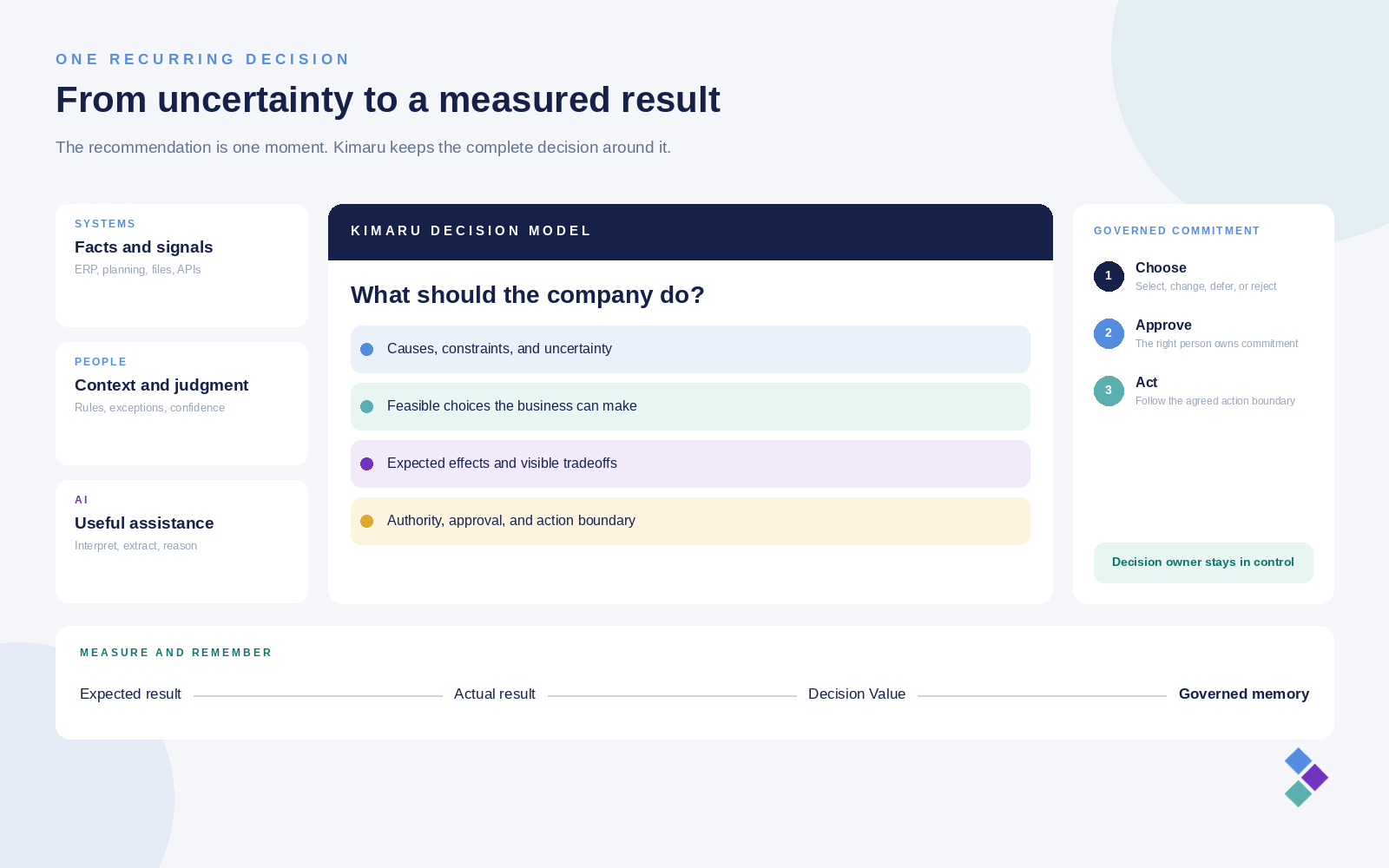
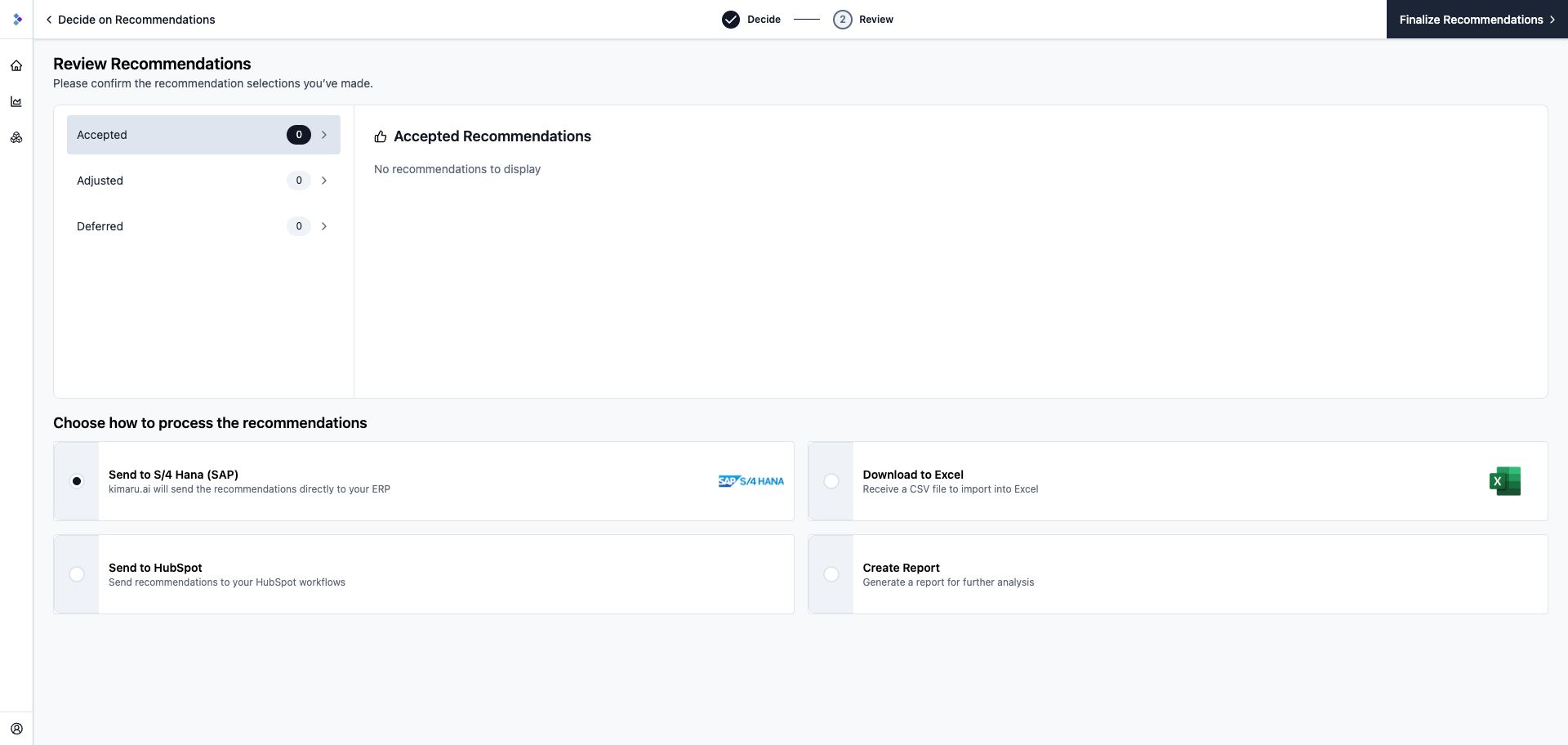
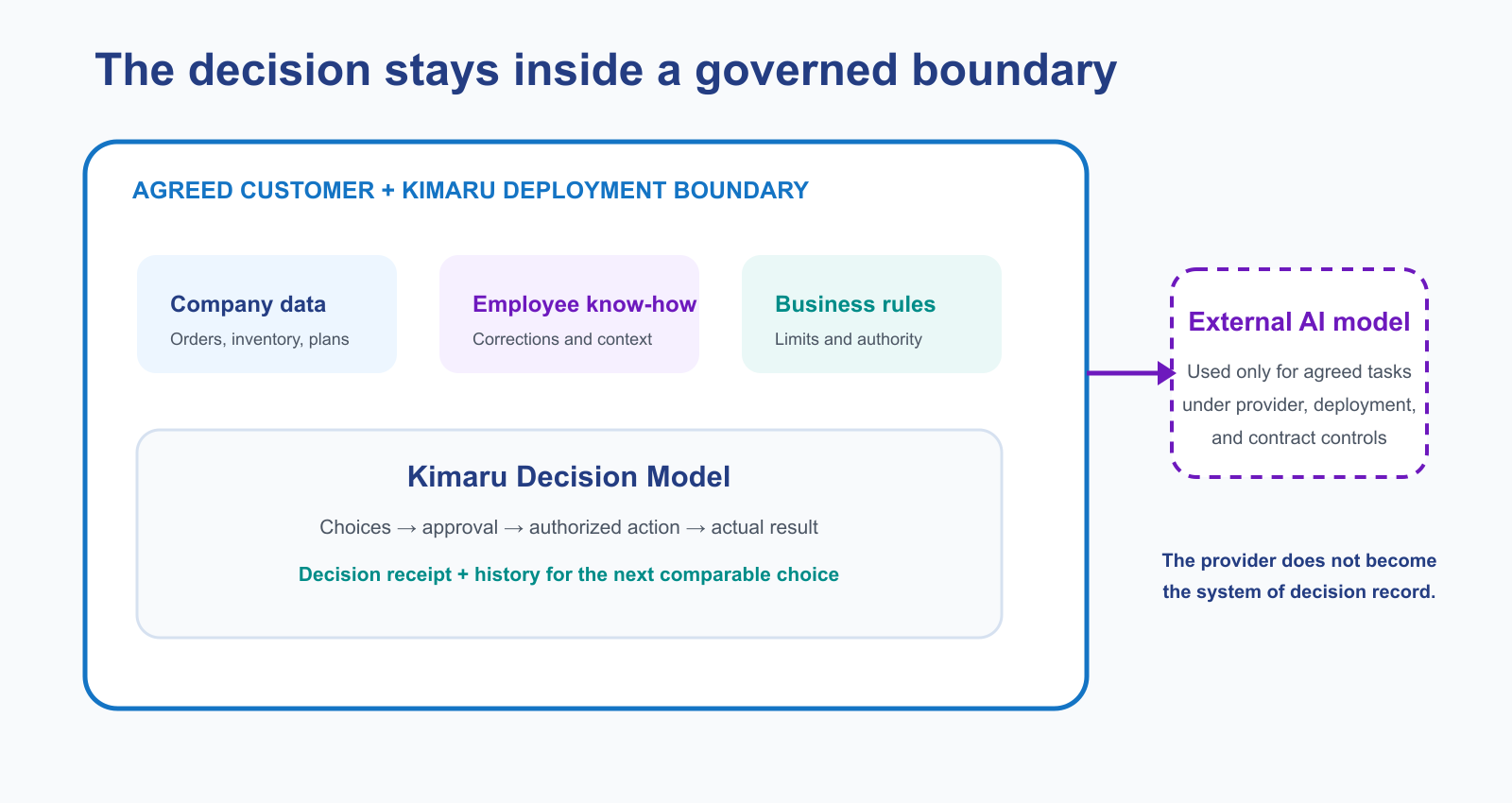
Kimaru brings together facts from your systems, the know-how in your people, and the rules of your business. It compares realistic choices, shows likely results, gets the right approval, tracks what happened, and makes the next decision better.

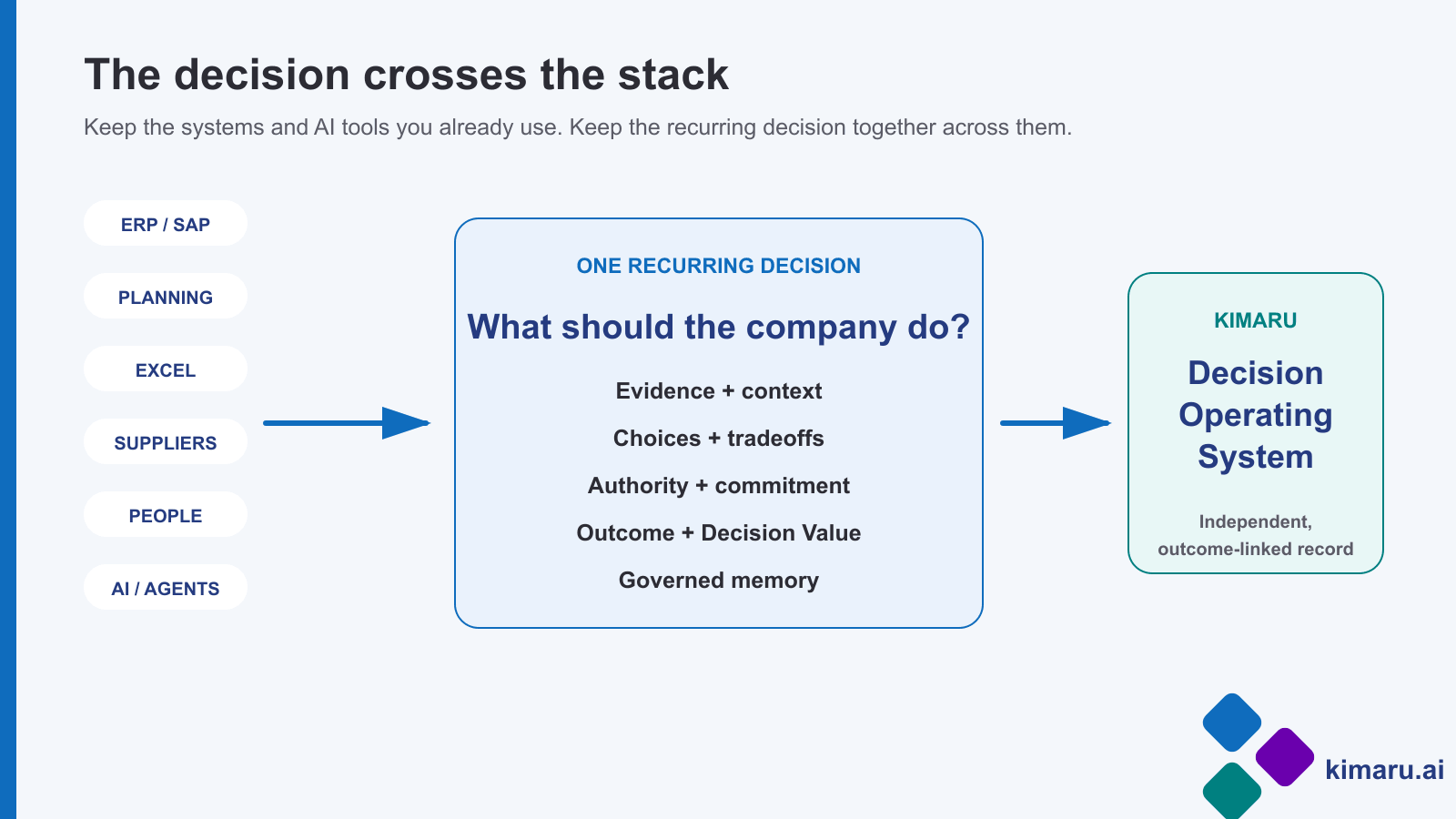
Keep your ERP, Copilot, SAP tools, models, and agents. Kimaru adds the decision layer they do not preserve.

Kimaru AI Demo

Three different things

A Copilot or agent receives one request and returns an answer or action for that task.

Copilot or agent

Does the task you ask: answer, search, write, recommend, or act.

An agent harness connects an AI agent to enterprise data and tools, routes work, and controls permissions.

Agent harness

Connects AI tools to data and systems, routes work, and controls permissions.

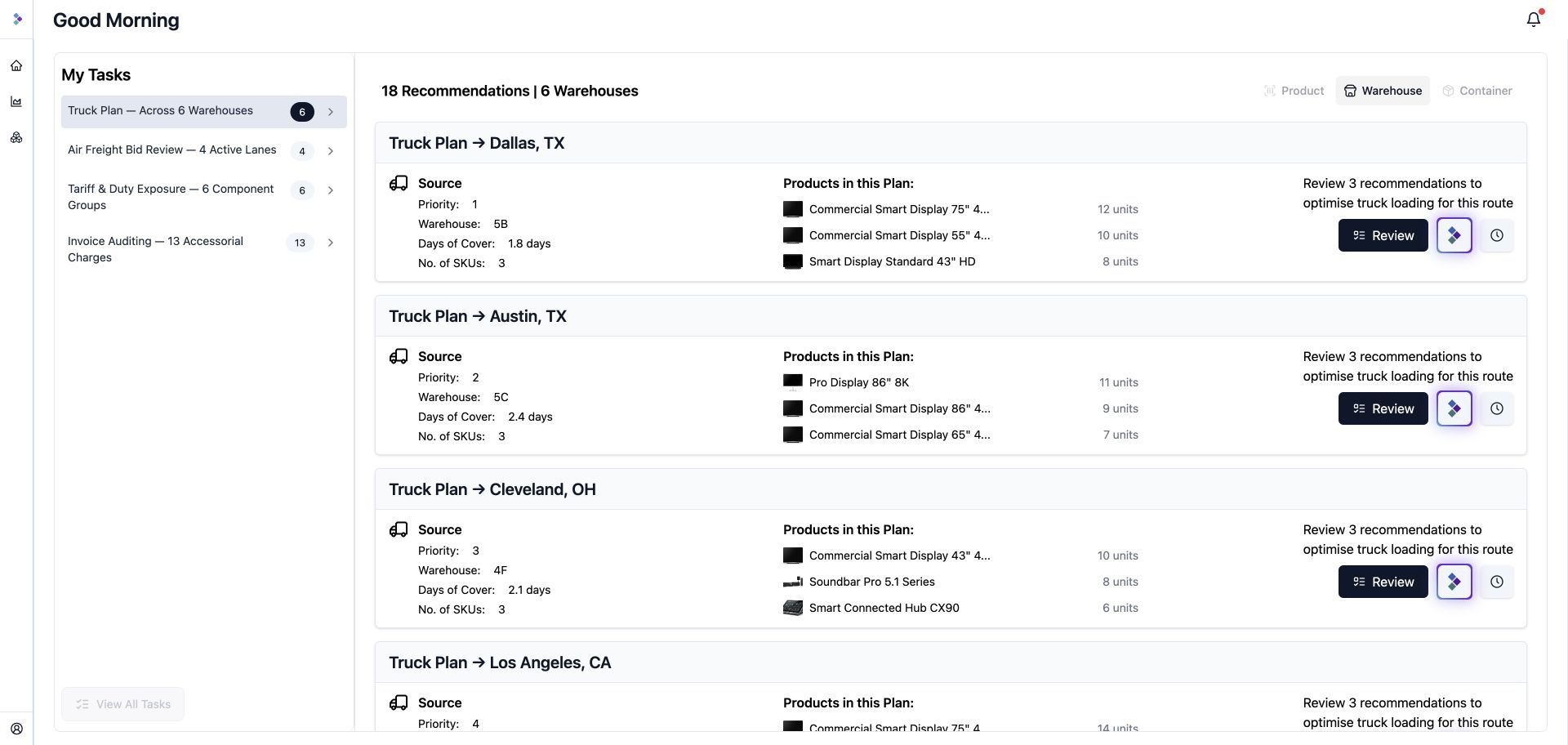
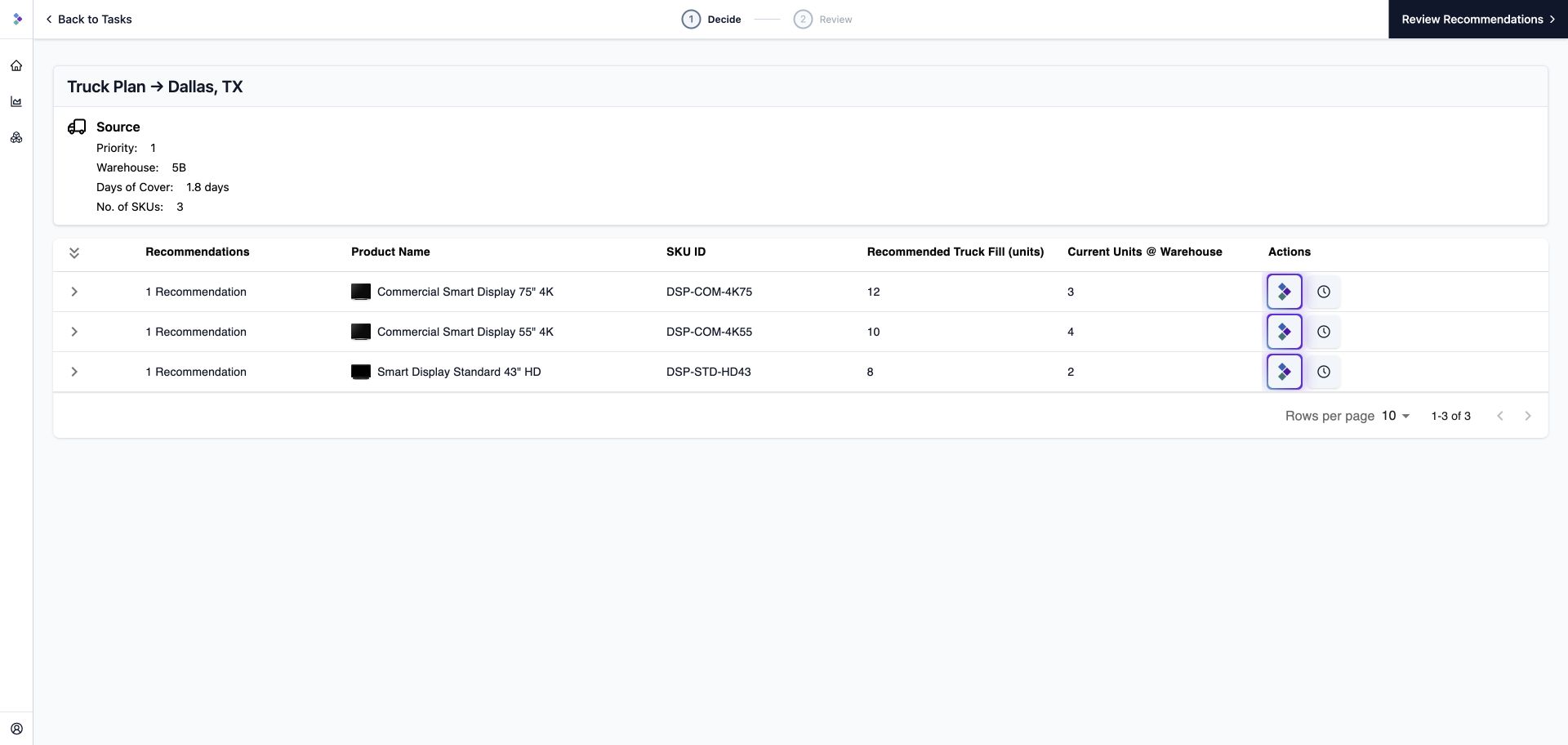
Kimaru Decision Model screen showing a recommendation, predicted outcome, and human review controls.

Kimaru Decision Model

Helps the company choose what to do, get approval, measure the result, and remember what worked.

Decision memory remains

Agents and harnesses can change. Your company’s decision memory should remain.

Simulate a decision before you commit.

Kimaru simulates decisions before you act.

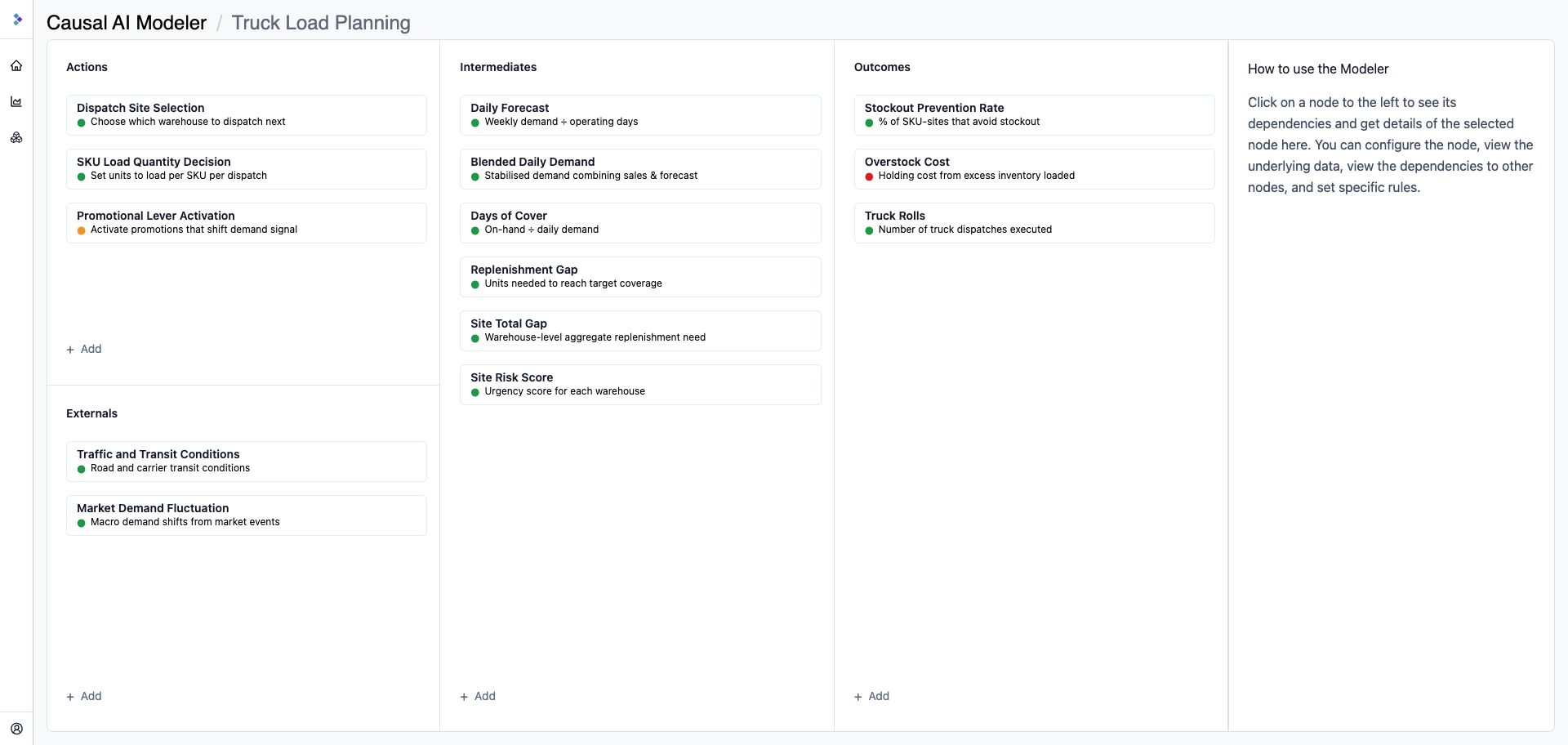
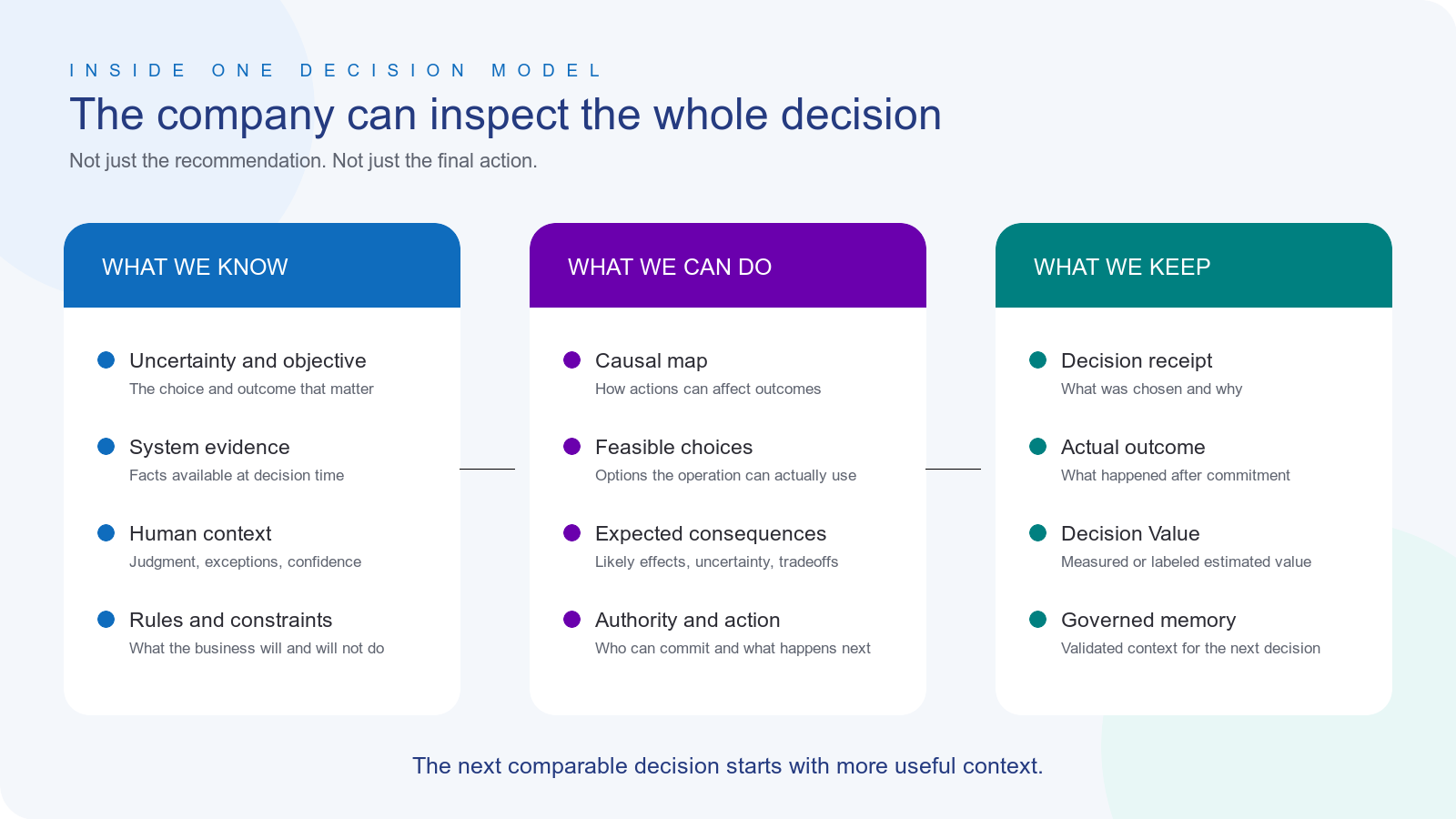
Kimaru uses a causal Decision Model to map what drives an outcome, simulate realistic choices before action, and learn by comparing predicted results with actual results.

Model what drives the result

Kimaru uses causal AI to connect operational facts, expert knowledge, business rules, actions, and outcomes.

Simulate realistic choices

Test likely effects on cost, service, capacity, material, and risk before the company acts.

Learn from the actual outcome

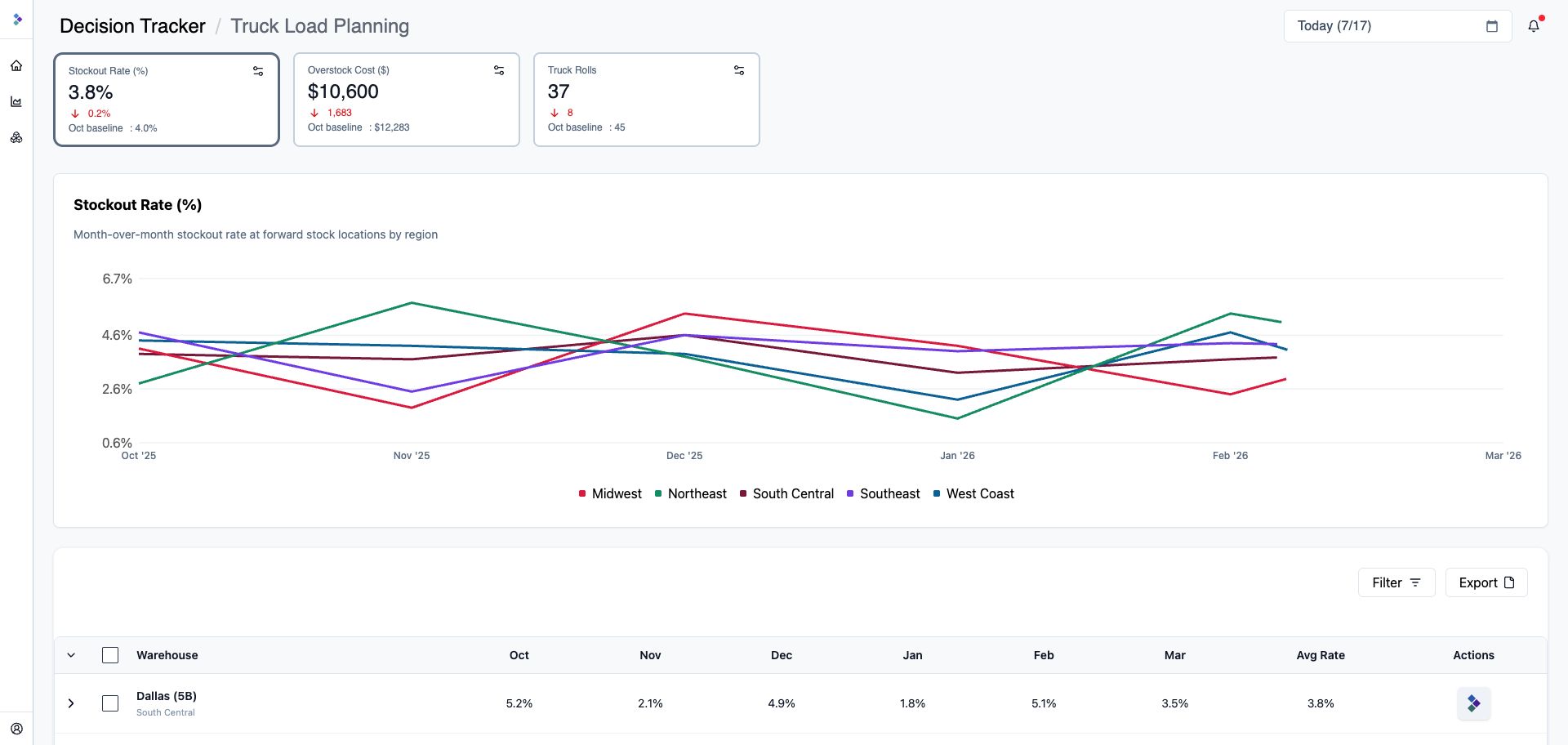
Compare predicted with actual results and update the Decision Model for the next decision.

A better decision creates measurable value

Wilton Weavers: production planning

Wilton Weavers used Kimaru for aircraft-carpet production planning, where ERP data had to be reconciled with material readiness, loom compatibility, lot-mixing rules, capacity, and planner judgment.

43% to 75% — new-order on-time production planning improvement
$325K — projected annual revenue increase
96–100% — ERP-versus-plan validation pass rate

Kimaru did not replace Wilton’s ERP or planners. It made the production decision visible, governable, measurable, and reusable.

Wilton Weavers case study: on-time production planning improved from 43 to 75 percent, projected annual value was 325 thousand dollars, and ERP-versus-plan validation was 96 to 100 percent.

AI tools perform tasks. Kimaru simulates decisions.

Copilot, SAP agents, and other AI tools can perform tasks while Kimaru preserves evidence, choices, approvals, outcomes, Decision Value, and learning as decision memory.

Copilot can answer. An SAP agent can act. Kimaru tests what is likely to happen before the company commits.

Kimaru’s causal Decision Model compares realistic choices, shows their likely consequences and tradeoffs, gets the right approval, and learns from the actual result.

Sign Up for Our Newsletter

Subscribe for updates on Kimaru.ai, decision intelligence, and industrial resilience.

Talk to us about one decision.

Tell us which recurring decision you want to improve.

en_USEnglish